
Why exam season feels overwhelming!
Exam season can feel intense. Deadlines begin to overlap, revision builds up, and campus spaces, especially the library, become increasingly busy. It can quickly feel like there is not enough time to cover everything.
As a final year student, I have experienced this cycle multiple times. One thing I have learned is that staying organised does not just help you study more. It helps you feel more in control during a stressful period.
Start earlier than you think you need to

The biggest lesson I have learned is to start early, even when it feels unnecessary.
At the beginning of the semester, exams can feel far away, which makes it easy to delay revision. A few weeks later, many students find themselves wishing they had more time. You do not need to begin perfectly or cover everything straight away. Starting small, even reviewing a lecture or two, can make a significant difference later on.
Keep your plan simple and clear
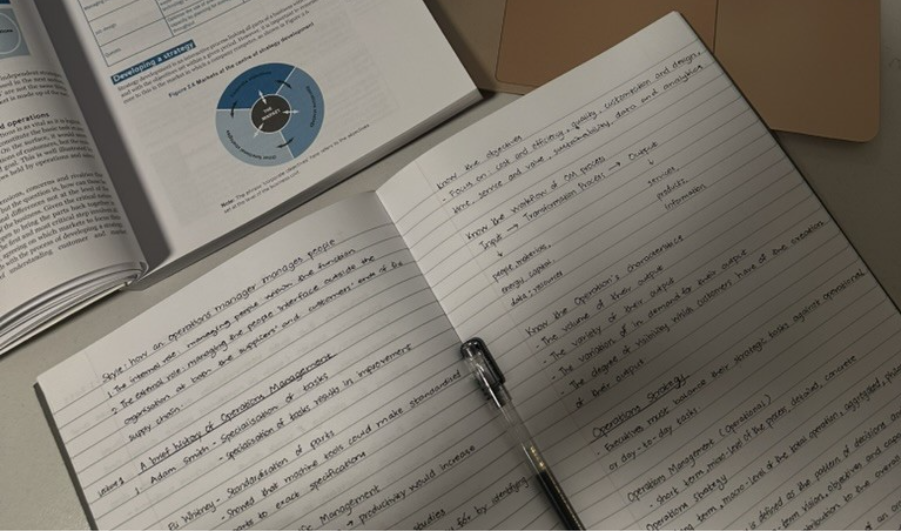
Having a plan is essential, but it does not need to be complicated. The most effective plans are often the simplest ones.
Start by listing your exams, deadlines, and key topics in one place so you can see everything clearly. Digital tools such as Google Calendar or Notion can help you stay organised, but a basic written list works just as well. The goal is to reduce mental clutter and create a clear starting point.
Break revision into manageable tasks
One of the main reasons students struggle to start revision is because it feels overwhelming. Writing broad tasks like revise everything can make it difficult to know where to begin.
Instead, break your revision into smaller, specific tasks. This could include reviewing individual lectures, summarising key theories, or completing past paper questions. Smaller tasks feel more achievable, which makes it easier to stay consistent and build momentum.
Use time effectively
Spending long hours studying does not always mean you are being productive. In many cases, shorter, focused study sessions are more effective.
Using time blocks such as 50 minutes of focused work followed by a short break can help maintain concentration and prevent burnout. This approach allows you to stay productive without feeling mentally exhausted.
Prioritise what matters most
Not all topics require the same level of attention, especially during revision.
Focusing on areas you find most challenging, as well as topics that are heavily weighted in exams, is a more effective strategy than trying to cover everything equally. Looking at past papers can also help identify patterns and guide your revision towards what is most likely to appear.
Make use of different study spaces on campus

While the library is often the first choice, it is not the only place to study.
If you find it too crowded or distracting, consider exploring other study spaces across campus. Locations such as the Urban Sciences Building, Newcastle University Business School, and the Frederick Douglass Centre offer quieter alternatives. Changing your environment can improve focus and help you stay motivated.
Do not neglect your wellbeing

Staying organised is not just about managing your workload. It is also about taking care of yourself.
Sleep, nutrition, and regular breaks play a crucial role in maintaining concentration and productivity. Studying while exhausted is often less effective, even if it feels like you are putting in more hours. Maintaining a balanced routine can help you perform better in the long run.
Consistency is more effective than cramming
It can be tempting to rely on last minute revision, especially when time feels limited. However, consistent study over a longer period is far more effective for understanding and retention.
Even a few focused hours each day can build a strong foundation and reduce the pressure leading up to exams. Over time, this approach makes revision feel more manageable and less overwhelming.
Final thoughts
Exam season is challenging, but it is also temporary. Staying organised will not remove all the pressure, but it will make the experience far more manageable.
Start early, keep your approach simple, and stay consistent. Focus on progress rather than perfection, and trust that your efforts will pay off.

By Gurleen, a third year Marketing and Management student and Student Content Creator